Lunar Orbiter Finds Fresh Crater Larger Than Colosseum
NASA spacecraft identifies rare two-year-old impact on moon's near side, offering data for future astronaut base.

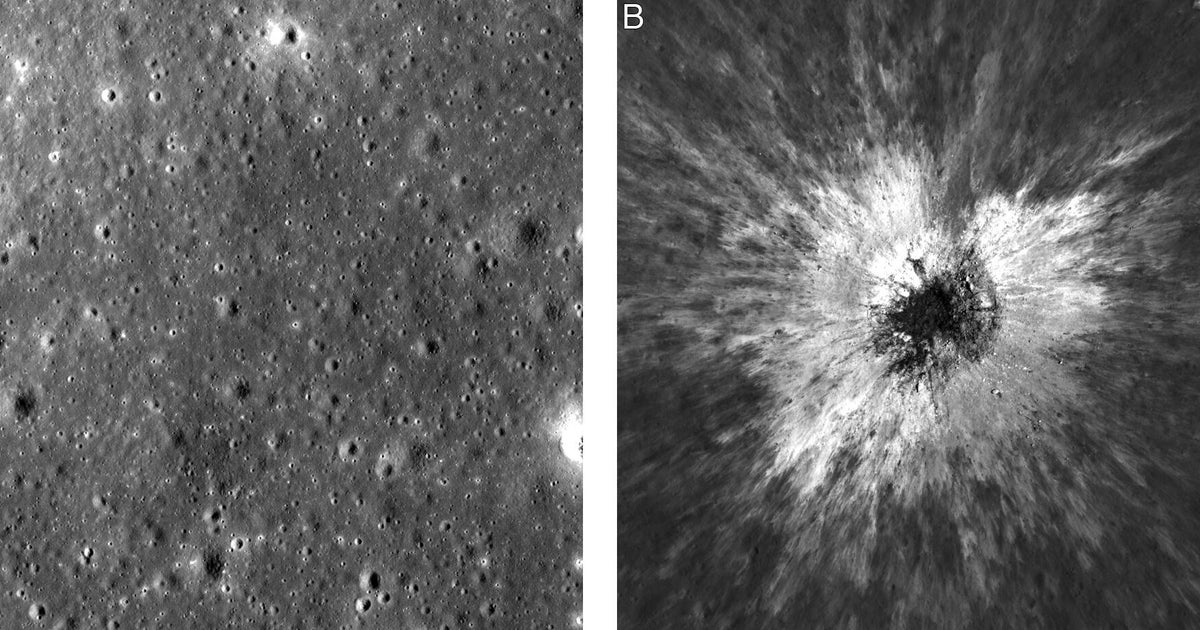
NASA's Lunar Reconnaissance Orbiter has identified a fresh impact crater on the moon's near side measuring about 728 feet across—larger than Rome's Colosseum—that formed from a powerful strike two years ago but escaped detection until now.
The discovery, reported Wednesday in two studies appearing in the journal Science Advances, is the solar system's largest known impact crater carved out in recent times, an event researchers estimate occurs only once every 132 years. The finding offers a rare natural experiment as NASA prepares to build a base for astronauts on the moon.
The steep-sided hole is up to 141 feet deep, roughly three vertically stacked yellow school buses. Named for the late Thomas McGetchin, a former director of Houston's Lunar and Planetary Institute, the crater is three times bigger than the previous record-holder found by the Lunar Reconnaissance Orbiter a decade ago.
The crater formed between April 11 and May 22, 2024, when an incoming fragment of an asteroid or comet the size of a three- to six-story building hit the surface. Telescopes on Earth and in space missed the event in real time; the orbiter's wide-angle images from that period were not identified until August 2025, with more detailed pictures taken last fall and confirmation of the discovery early this year.
The impact churned the lunar surface for more than 66 miles. Dust and rocky soil were hurled away at a higher angle than expected, according to Mark Robinson, chief scientist for the orbiter's cameras at Intuitive Machines and lead author of one study.

A separate study identified a 4-mile-wide cold spot around the new crater, consistent with a loosening of the moon's topsoil. Co-author David Paige of the University of California, Los Angeles, likened the process to gardening. "We're now thinking of impacts as a way to garden the regolith—churning the sediments and putting stuff above that's usually below the surface," Paige said in a statement.
The Lunar Reconnaissance Orbiter has circled the moon since 2009. Its crater discoveries show that the moon's top inch of soil is being overturned by ejected material every 80,000 years, faster than previously thought, according to Robinson. That means the Apollo moonwalkers' dusty lunar footprints will "definitely be long gone in that time frame," Robinson said in an email.
Robinson said the next step is to calculate the risk of ejected crater material striking NASA's planned moon base. "That information will help engineers harden structures so one won't have to worry about damage, or maybe worry less," he added.
The new crater, with detailed before-and-after imagery from the orbiter, provides a direct measurement of impact frequency and ejecta dynamics on the lunar surface. The studies appear in Science Advances, but no further timeline for base construction was given in the reports.

Continue reading with a subscription
Get unlimited access to all articles and exclusive content.
Get more articles like this in your inbox
Sign up for our daily newsletter and never miss a story.